
When Legacy Technology Becomes a Barrier to Mission Impact
Most Organizations Already Know Where the Problem Is
Nearly every organization has a system that employees tolerate rather than embrace. It may be difficult to maintain, frustrating to use, or unable to support new business requirements. Leadership teams often recognize these limitations long before modernization projects begin.
The challenge is that replacing critical applications can feel risky, expensive, and disruptive.
As a result, modernization decisions are often delayed while technical debt continues to accumulate.
The Hidden Cost of Doing Nothing
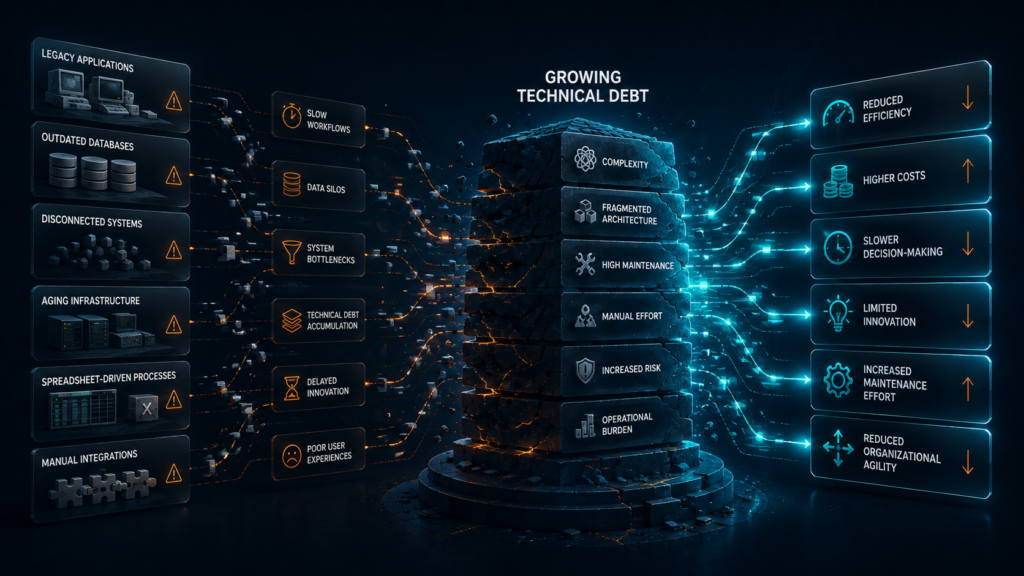
Legacy technology rarely creates a single major problem. Instead, it creates hundreds of small inefficiencies.
Employees spend time working around limitations. Data remains trapped in disconnected systems. User experiences become increasingly outdated. Innovation slows because existing applications cannot support new capabilities.
Eventually, maintaining the status quo becomes more expensive than moving forward.
Why AI Is Changing the Modernization Conversation
AI is helping organizations reduce much of the uncertainty traditionally associated with modernization.
Modern tools can analyze applications, identify dependencies, automate testing, and accelerate transformation efforts. This creates greater visibility into modernization requirements and reduces risk throughout the process.
More importantly, organizations can focus on business outcomes instead of technology replacement alone.
Modernization Is a Business Strategy
Successful leaders increasingly view modernization as an organizational initiative rather than an IT project.
Modern systems improve operational efficiency, enhance experiences for members and donors, and create the foundation necessary to support future innovation.
Organizations that modernize effectively position themselves to take advantage of AI, analytics, automation, and digital transformation opportunities for years to come.

Key Takeaways
- Legacy systems impact more than IT operations.
- Technical debt creates growing organizational costs.
- AI helps accelerate modernization efforts.
- Modernization supports future innovation and growth.
- Organizations benefit when modernization aligns with business objectives.
Actionable Next Steps
Identify systems creating operational friction and evaluate how technical debt is impacting organizational goals. Create a phased modernization roadmap aligned to business priorities and long-term growth initiatives.
How CEI Can Help
CEI helps organizations modernize applications, reduce risk, and build scalable digital foundations that support growth, innovation, and future AI adoption.