
Microsoft Dynamics NAV Is Changing. What's Your Next Move?
Your ERP. Your Timeline. Your Choice.
Every organization’s modernization journey is different.
Some organizations are ready to transition to a cloud-based ERP platform today. Others need time to optimize their current environment, evaluate alternatives, or establish a phased transformation strategy.
The right path is determined by your business objectives, operational needs, and long-term goals, not vendor recommendations alone.
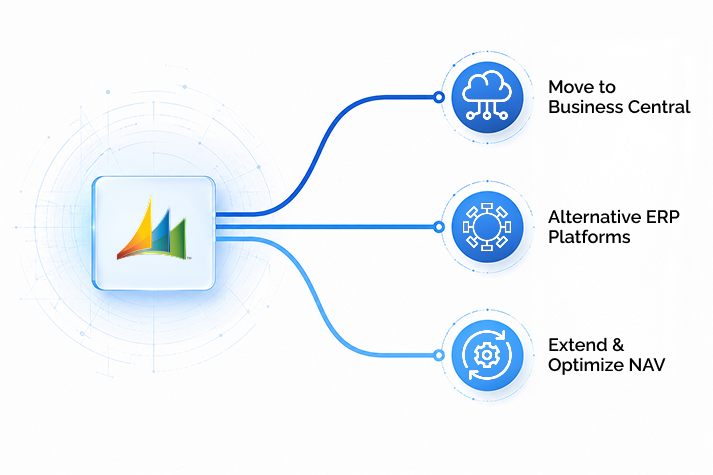
Explore Your Options
Select the modernization path that best aligns with your business goals, operational requirements, and future strategy.
Modernize with Dynamics 365 Business Central
Transition to Microsoft’s modern cloud ERP platform and build a foundation for future growth, automation, and innovation.
- Modern Cloud ERP
- Streamlined Operations
- Enhanced Visibility
- AI & Automation Ready
Find the ERP That Fits Your Business
Assess ERP platforms based on your business needs, existing systems, and long-term goals.
- Platform-Neutral Guidance
- Requirements-Based Evaluation
- Future-Ready Architecture
Maximize the Value of Your Existing Environment
Improve performance, reduce complexity, and build a roadmap for future modernization.
- Operational Stability
- Modernization Planning
- Improved Performance
Why Organizations Are Acting Now
Legacy ERP systems weren’t built for today’s pace of change. As business requirements evolve, organizations are evaluating how to reduce complexity, improve agility, and create a stronger foundation for future innovation.

Unlock new opportunities for automation, analytics, and AI.

Reduce the cost and complexity of legacy ERP environments.

Prepare your business for cloud-first, future-ready operations.
Create a scalable foundation for long-term growth and innovation.
Our Proven Framework
Transformation doesn’t have to begin with months of manual discovery, stakeholder interviews, and planning workshops. Our assessment-driven approach helps organizations document business processes and customizations, evaluate modernization readiness, and identify potential risks before major migration decisions are made. By improving visibility into legacy environments and supporting strategic migration planning, organizations can move forward with greater confidence, clarity, and reduced transformation risk.

Assess
Evaluate your ERP environment, customizations, integrations, and business needs.
-
Plan
Create a roadmap aligned with your goals, timeline, and modernization strategy.
-
Modernize
Prepare applications, workflows, data structures, and integrations for future-state operations.
-
Migrate
Execute a structured transition strategy designed to minimize disruption and reduce operational risk.
Optimize
Continuously improve processes, reporting, user experience, automation, and operational efficiency.








Why Organizations Choose CEI
The experience, expertise, and outcomes needed to modernize with confidence.
Why CEI
“Why should I trust CEI?”

ERP-agnostic guidance
Business-first approach
Accelerated modernization
Proven transformation experience

Microsoft Expertise
“Why is CEI qualified?”

Business applications expertise
ERP modernization experience
Cloud transformation capabilities
AI and integration specialization

Business Outcomes
“What will I gain?”

Reduced operational costs

Improved business agility

Enhanced data visibility

Accelerated business growth
Don’t Wait Until Support Runs Out
Support timelines are an important part of any Great Plains modernization strategy. Organizations that begin planning before key support milestones are reached have more flexibility to evaluate options, align decisions with business priorities, and reduce the risk of rushed transitions.

PLANNING AHEAD
Planning Early Creates More Options
As support milestones approach, early planning gives organizations more time to assess their current environment, evaluate modernization pathways, and build a transition roadmap tailored to operational needs, budget expectations, and long-term growth objectives.